How to Design the Perfect Package Box in 2026?

Time:2026-09-29 Author:Amelia
0%

Package Box Design in 2026 is more than choosing a color and adding a logo. A successful box protects its contents, communicates value, and feels right in a customer’s hands. As design authority Paul Rand put it, “Design is the silent ambassador of your brand.” That idea matters when a parcel arrives at a doorstep: its proportions, print, and opening experience all speak before the product does.

This guide explores how to shape a package box around real needs. It considers product dimensions, shipping protection, material choices, print finishes, accessibility, and shelf appeal. A snug fit can reduce wasted space, while a sturdy corner may prevent damage during a rough delivery. Paper texture, a clear label, or a simple inside message can make the experience feel considered. Small details count.

But no template works for every product. A premium finish may look striking and still make the box harder to recycle. A minimal design may feel clean but leave customers unsure how to open it. Those trade-offs deserve testing, not guesswork. Make a sample, pack the actual product, and inspect it after handling. Some choices will still miss. That is useful feedback.

The sections ahead offer a practical path from early sketches to production-ready decisions. They also ask a harder question: does each design choice help the product, the customer, or the brand? If not, reconsider it. A better box is not always more elaborate. It is one that protects, informs, and earns its place.
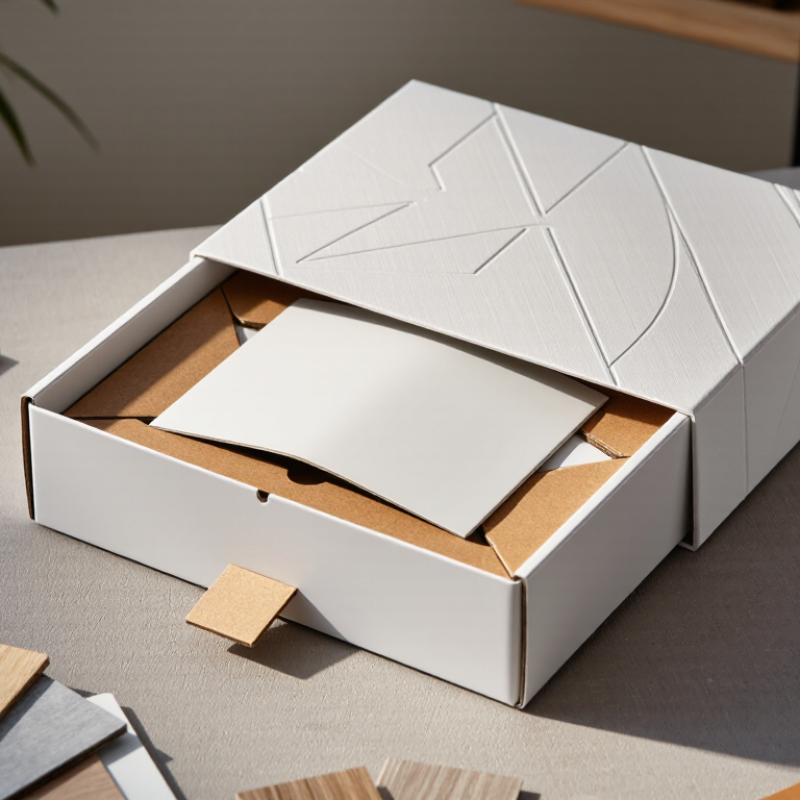
How to Design the Perfect Package Box in 2026?

Define the Box’s Purpose, Product, and Target Customer

A box should solve a real job before it tries to look impressive. Is it protecting a ceramic mug, organizing a refill kit, or making a small gift feel considered? Product weight, fragility, shape, and shipping route determine board strength, inserts, and opening style. A mug may need a snug molded-paper cradle; a soft garment usually needs less cushioning. Then define the buyer. A busy online shopper may value quick opening and easy recycling, while a gift buyer may notice texture, color, and a neat reveal.

Keep the promise realistic. McKinsey’s 2020 packaging survey reported that 60–70% of consumers were willing to pay more for sustainable packaging. That is a survey finding, not a guarantee for every market or customer. Use it as a reason to test material choices, not to add a vague “green” claim. Prototype the box with the actual product, then test a packed sample for drops, scuffs, and awkward assembly. A design can look perfect on screen and still arrive crushed.

Tips: Write a one-line purpose, such as “protect a 500-gram glass jar during parcel shipping.” List the target buyer’s priorities, then rank them. Test two box sizes with real packing materials. Measure empty space and packing time. Small note: teams often guess wrong about opening feel. Ask a few customers to try it, and revise even if the first version looks polished.

Select Materials, Dimensions, and Structural Design

Designing a package box starts with the product, not a standard carton size. Measure its length, width, and height at the widest points, including lids or attachments. Add enough clearance for protective material, but avoid a loose fit that lets the item slide. Small gaps matter. For a glass jar, a molded insert or folded paper cushioning can keep it away from the walls. For a lightweight book, a close-fitting paperboard mailer may be sufficient. Choose materials according to weight, handling, and moisture exposure. Corrugated board offers cushioning for heavier shipments, while paperboard suits lighter retail packaging. Recycled content can be useful, though its stiffness and surface finish should be checked on a sample.

The structure should make packing easy and resist pressure during transport. A tuck-top box opens quickly, while a mailer with locking tabs can stay closed without extra tape. Match the board grade and flute profile to the box size and expected load; thicker material is not automatically better. Prototype the dimensions with the actual product inside. Check for crushed corners, shifting contents, and awkward assembly. A simple drop test can reveal weak seams, but it cannot reproduce every delivery condition. It is tempting to optimize every measurement on screen. That choice can be wrong. A few millimeters may change how the box folds or how securely an insert holds the product.

How to Design the Perfect Package Box in 2026

Material recovery rates can help inform material selection. Pair recyclable materials with right-sized dimensions and a protective structure suited to the product.

Data note: These are U.S. municipal solid waste recycling rates by material, not packaging-specific rates. Source: U.S. Environmental Protection Agency, Advancing Sustainable Materials Management: 2018 Fact Sheet.

Develop the Visual Identity and Essential Package Information

How to Design the Perfect Package Box in 2026?

A package box should express its visual identity before customers read every word. Choose one primary color, one supporting color, and two dependable typefaces. Keep the logo visible, but do not let it dominate the entire front panel. A small color strip can connect the lid, sides, and inner packaging. I usually test the design under warm store lighting and cold warehouse lighting. Colors can shift more than expected.

Essential information needs a clear reading order. Place the product name, quantity, material details, care instructions, origin, and contact information where customers can find them quickly. Use strong contrast and generous spacing. Keep important text away from folds, seams, and curved edges. Add a scannable code only when it provides useful information. Test it on a real box, not just a screen.

Measure twice.

I once approved a carton with beautiful lettering that became difficult to read after printing. The problem was small text and a slightly rough surface. That mistake changed my process. I now print prototypes, check text at arm’s length, and ask someone unfamiliar with the product to inspect them. Information should match the actual contents, materials, and current requirements. Local packaging rules may differ, so a qualified compliance professional should review the final artwork. Even a polished design can fail when one essential detail is missing.

Create Prototypes and Test Protection, Usability, and Appearance

A package box should be tested as a physical object, not judged from a screen. Make several prototypes from the intended board grade, then fold and close each one by hand. A prototype rarely behaves exactly like the drawing. Check whether the lid sits flat, corners stay square, and seams remain secure after handling. Small details matter.

Test protection with the product or a similar-weight substitute inside. Use the same packing materials and fill weight for each trial. Apply gentle compression, shake the box, and perform controlled drops that reflect likely handling conditions. Inspect for crushed corners, shifted contents, and loosened closures. Record what failed and where. One test is not proof; repeat it with consistent conditions, and adjust the method to match the product’s real shipping journey.

Usability needs its own trial. Ask someone unfamiliar with the design to open, close, and repack the box without instructions. Notice sharp folds, awkward tabs, and places where fingers struggle. Then assess appearance in ordinary light, both closed and open. Do labels remain readable? Does the product sit neatly, or look lost in the space? A beautiful box can still be frustrating. And a protective one can feel bulky. Revise the structure, then test again; sometimes the best-looking change weakens the fit, and that trade-off deserves another look.

Finalize Production, Sustainability, and Quality Standards

How to Design the Perfect Package Box in 2026?
Finalize Production, Sustainability, and Quality Standards

A polished box starts with a production-ready specification. Record its inside dimensions, board grade, flute or paper thickness, print colors, and closure method. Check that the product fits with its inserts, not just the empty box. A few millimeters can affect packing speed and protection. Ask your supplier for a physical sample before approving a full run. Test it with the actual product and packing process. Small details matter.

Tips: Compare recycled-content options, but judge the finished box too. Recycled fibers can vary in strength and appearance. Request material documentation and confirm that coatings, inks, and adhesives suit your recycling goals. Reduce unnecessary layers where practical. Don’t remove cushioning until drop tests show the product remains protected.

Set measurable quality checks before production begins. Inspect print alignment, color consistency, glue seams, and box dimensions across several samples. Agree on acceptable tolerances with the manufacturer, then keep a signed reference sample. For transit testing, use a packed box and realistic handling conditions; an empty carton proves little. Track defects by type and batch so recurring problems are easier to spot. One honest limitation: a sample cannot reveal every variation in a large run. Plan inspections during production, and revise the specification when real results expose a weak point.

How to Design the Perfect Package Box in 2026? — Finalize Production, Sustainability, and Quality Standards

Design Dimension Recommended Specification or Target Production and Quality Check Relevant Standard or Method
Product fit and internal dimensions Set internal length, width, and depth from the product and its protective materials. Minimize excess space without allowing the product to shift or contact vulnerable box walls. Check dimensions on first-off samples and conduct a packed-product fit test. Confirm the box closes without bulging or excessive compression of the contents. Approved product and packaging drawings; documented fit-test procedure.
Board construction Select single-wall or double-wall corrugated board according to packed weight, stacking load, distribution route, and required protection. Specify flute type, liners, and performance grade on the purchase specification. Verify board grade and flute construction against the approved specification. Use edge-crush or box-compression results to support material selection rather than relying on board appearance alone. ISO 3037 for corrugated-board edgewise crush resistance; ISO 12048 for compression and stacking tests on complete, filled transport packages.
Box strength and stacking Set a compression requirement from the expected stack height, storage duration, humidity, and safety margin. Do not use one compression target for every product or supply chain. Test representative filled boxes in the intended orientation. Record peak force, deformation, and failure mode; repeat after relevant conditioning where moisture exposure is expected. ISO 12048; ASTM D642 for compressive resistance of shipping containers and components.
Transit protection Define the anticipated hazards, such as drops, vibration, and handling impacts, before finalizing cushioning and closure design. Run a distribution simulation with the actual packed configuration. Inspect the product and package after testing and document any damage or functional failure. ISTA 3A for packaged products shipped through parcel delivery systems; ASTM D5276 for free-fall drop testing; ASTM D4728 for random vibration testing.
Board moisture and storage Set storage and handling conditions suited to corrugated board. Keep cases dry and protected from prolonged exposure to high humidity, which can reduce strength. Condition samples consistently before comparative testing. Record test atmosphere and inspect incoming board for water damage, warping, and delamination. ISO 187 for conditioning and testing atmospheres for paper, board, and pulps.
Closure and sealing Choose tape, adhesive, or a self-locking design that stays closed through the intended handling route. Size closure areas to suit the box style and packed load. Check seal placement, adhesion, flap alignment, and closure consistency during line trials. Test filled boxes after transit simulation for opening, seam failure, or leakage of contents. Documented closure specification and package-performance testing based on the applicable distribution route.
Material efficiency Reduce unnecessary board area, void fill, and components while maintaining verified protection. Compare designs by total packaging material per shipped product. Record the mass of each packaging component and compare damage rates and material use across validated design trials. ISO 18601 provides the framework for environmental standards in packaging and the environment.
Recycled content Set a recycled-fiber target that is compatible with required strength, food-contact rules where relevant, and available local supply. State the measurement basis clearly. Obtain supplier documentation for the material composition and calculate the claim using a defined mass basis. Retain evidence supporting any environmental statement. ISO 14021 for self-declared environmental claims, including recycled-content claims.
Recyclability and components Prefer a fiber-based box with components that can be readily separated. Check coatings, laminations, windows, labels, and adhesive choices against the collection and recycling systems in the destination market. Review the complete package, not just the main box material. Avoid unqualified recyclability claims where local collection or recycling access has not been verified. ISO 18601; local packaging-waste and recycling guidance for each market served.
Printing and required information Use legible, durable print for handling instructions, product identification, and shipping marks. Keep essential information clear of folds, seams, and tape paths. Approve a production proof and inspect print position, contrast, text, and barcode readability on finished boxes. Approved artwork and barcode verification procedure applicable to the product and sales channel.
Manufacturing tolerances Define dimensional and print-position tolerances with the converter before production. Set tolerances based on the box style, equipment capability, and product fit requirements. Inspect samples at first production and at agreed intervals. Record measured dimensions, defects, lot identification, and disposition of nonconforming product. Approved packaging specification, inspection plan, and documented corrective-action process.
Final release criteria Release production only when material, dimensions, print, closure, and performance meet the approved specification. Maintain a signed sample approval, test records, supplier lot traceability, and documented approval of any material or process change. Quality management procedures aligned with ISO 9001 principles; applicable package tests selected for the distribution system.

Targets should be validated against the specific product, package format, destination market, and distribution environment before production release.

FAQS

How should I measure a product for a custom package box?

Measure length, width, and height at the widest points. Include lids, handles, and attachments. Leave room for cushioning, but avoid sliding space.

What material should I choose for the box?

Use corrugated board for heavier products and rougher handling. Paperboard can suit lighter retail items. Moisture exposure also matters.

How can I protect a glass jar inside the box?

Use a molded insert or folded paper cushioning. Keep the jar away from every wall. Small gaps can still cause damage.

Is thicker board always better?

Not always. Match board strength and flute profile to the box size and expected load. Excess material may add cost without improving protection.

Which box structure makes packing easier?

A tuck-top box opens quickly. Locking tabs can keep a mailer closed without extra tape. Test the folding process with the actual product.

Why is a physical sample important before production?

Screen measurements can miss folding problems. A sample reveals crushed corners, loose inserts, and awkward assembly. A few millimeters matter.

How can packaging support sustainability goals?

Compare recycled-content options, then inspect stiffness and surface finish. Review coatings, inks, and adhesives. Remove unnecessary layers only after testing protection.

What quality checks should happen before and during production?

Check dimensions, print alignment, color consistency, glue seams, and closure strength. Use several samples. Keep a signed reference sample.

What kind of transit test is useful?

Test a fully packed box under realistic handling conditions. A simple drop test can expose weak seams. It cannot copy every delivery condition.

Can one approved sample guarantee a consistent production run?

No. Material and printing can vary across batches. Track defects by type and batch, then inspect during production. One sample is not enough.

Conclusion

A successful Package Box Design begins with a clear understanding of what the box must do, what product it will hold, and who will use it. These decisions guide the choice of materials, dimensions, and structure, helping the package protect its contents while remaining practical to handle, store, and ship. The box should also reflect the product’s identity through thoughtful colors, typography, and imagery, while presenting essential information in a clear, easy-to-read way.

Before production, create prototypes and evaluate their protection, usability, and appearance. Check that the box is easy to open, suits the product, and holds up during ordinary handling. Then finalize production details, prioritize responsible material choices, and set consistent quality standards. Careful planning and testing can result in packaging that is appealing, functional, and dependable.

Amelia

Amelia

Amelia is a seasoned marketing professional with a wealth of expertise in our company’s core offerings. With an unwavering passion for driving growth and innovation, she plays a pivotal role in shaping our marketing strategies and enhancing brand visibility. A key aspect of her responsibilities......