Explore our foundational range of certified retail, gift, and catering solutions manufactured to strict international standards.
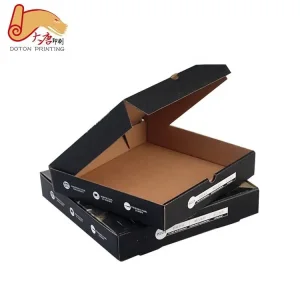
In the highly competitive commercial food delivery and quick-service restaurant (QSR) industries, packaging is no longer just a vessel—it is an extension of product quality, thermal thermodynamics, and compliance framework. For corporate purchasing directors and logistics specialists, procurement of 10-inch pizza boxes requires deep consideration of material science, environmental regulations, and structured unit economics. This document analyzes the specifications, mechanical tolerances, and economic factors governing food-grade packaging.
To safely market food contact materials within the European Economic Area (EEA) and globally, manufacturers must strictly adhere to rigorous safety profiles. While the CE mark itself traditionally applies to specific product groups, global food contact standards align with Regulation (EC) No 1935/2004 and the German BfR Recommendation XXXVI for paper and board. These directives ensure that:
At Doton Printing, we leverage raw material chains certified by the Forest Stewardship Council (FSC). This guarantees that all fibers are harvested from sustainably managed forests, supporting corporate ESG compliance objectives. Furthermore, our use of soy-based inks eliminates VOC emissions, ensuring a safe end-of-use profile.
The global takeaway food market has experienced massive changes, driven by automated delivery systems and strict municipal restrictions on single-use plastics. Corporates are increasingly standardizing their requirements around high-yield paper solutions. Standard 10-inch corrugated pizza boxes represent one of the most in-demand packaging sizes, serving as the industry benchmark for medium-size personal pizzas.
For large-scale enterprise buyers, the primary procurement challenges involve maintaining box rigidity in high-humidity climates, optimizing palletization space, and controlling per-unit costs under volatile raw material indices. Standardizing packaging designs around optimized structural profiles (such as E-flute and B-flute corrugated configurations) allows procurement managers to balance storage requirements and product protection.
Design & Print Expertise
Monthly Box Capacity
Certified Eco Materials
Advanced Press Systems
The performance of a food delivery box relies heavily on structural engineering. A box must resist grease penetration, retain heat, and remain stable when stacked. The figure below highlights the typical material breakdown of our standard food-grade boxes:
Measuring approximately 1.5mm to 1.8mm in thickness, E-flute provides exceptional crush resistance and a smooth exterior face, ideal for high-resolution graphics.
Using premium virgin kraftliner paper (ranging from 125 to 150 GSM) delivers structural strength, protecting packaging even during high-humidity steam exposure.
Our eco-friendly, clay-coated interior liners prevent oil and grease migration, preserving box structural integrity during long-distance delivery.
To prevent moisture condensation from making the crust soggy, our 10-inch packaging designs incorporate ventilation holes. These holes release excess steam while preserving core thermal insulation, keeping the food hot and crisp during transport.
As a leading supplier with advanced production systems in Zhuhai, China, Doton Printing maintains highly competitive pricing structures for direct factory imports. Our typical pricing is calculated based on raw paper weight, printing options, and minimum order quantities (MOQ).
| Box Dimension | Material Specification | Printing Specification | MOQ (Units) | FOB China (USD/Unit) |
|---|---|---|---|---|
| 10" x 10" x 1.75" | E-Flute Corrugated + 125g Virgin Kraft | Flexographic Printing (1-2 Colors) | 10,000 | $0.12 - $0.16 |
| 10" x 10" x 1.75" | E-Flute Corrugated + 150g Premium Kraft | High-Definition Offset Printing (CMYK) | 10,000 | $0.15 - $0.19 |
| 10" x 10" x 1.75" | B-Flute Heavy-Duty + 175g Kraftliner | High-Definition Offset Printing (CMYK) | 20,000 | $0.18 - $0.22 |
| 10" x 10" x 1.75" | E-Flute Recycled White Board | Water-Based Eco-Inks (1-4 Colors) | 10,000 | $0.11 - $0.14 |
To reduce shipping costs, all 10-inch corrugated pizza boxes are shipped flat-packed (knocked-down flat - KDF). They are securely bundled in moisture-resistant film wraps and packed onto standard export-grade pallets. A standard 40ft High Cube (HC) container can hold approximately 80,000 to 100,000 flat-packed 10-inch boxes, significantly reducing transit costs per unit.
Established in 2009, Zhuhai Doton Printing is one of the leading professional manufacturers in China.
We specialize in manufacturing custom paper boxes, corrugated packaging, rigid gift boxes, and shopping bags. Our packaging solutions serve diverse global markets, including food, beverage, cosmetics, jewelry, toys, and luxury retail.
A core driver of Doton's market success is our dedication to raw material safety, research, and product development. We prioritize FSC-certified paperboard, post-consumer recycled substrates, and soy-based inks. To ensure high-resolution outputs, we use automated Computer-to-Plate (CTP) prepress systems.
Our manufacturing floor features high-efficiency printing systems, including brand-new KBA offset presses, supporting a monthly output of over 1,000,000 boxes. Our post-press processes are fully integrated, featuring automated lamination, foil stamping, die-cutting, paper mounting, and folding-gluing lines.
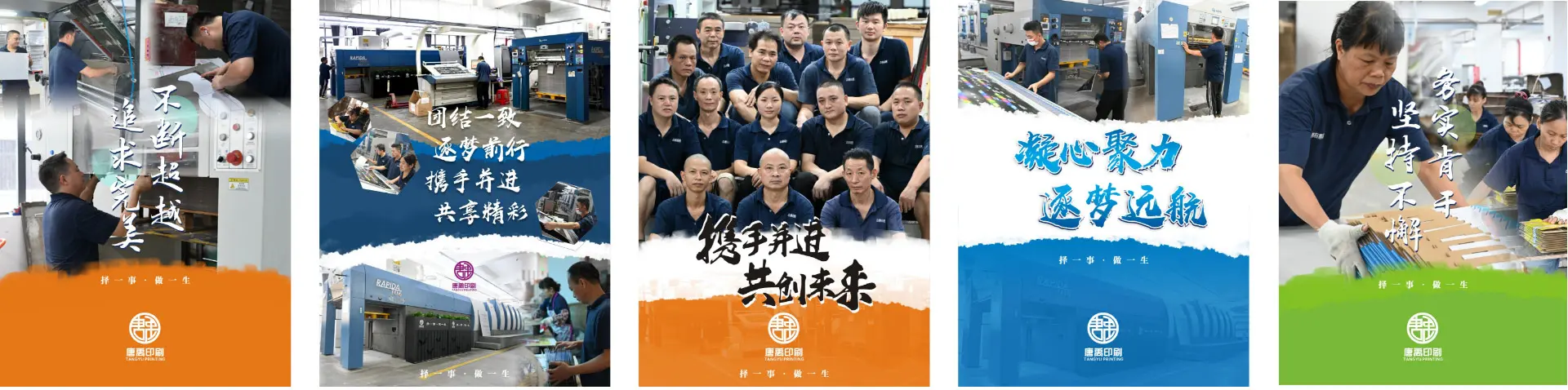

Comprehensive design-to-delivery support, developing custom configurations tailored to international markets.
Equipped with Heidelberg and KBA offset presses for sharp brand color replication and layout consistency.
Reliable supply chains for raw materials and paperboard, ensuring stable production even during peak seasons.
Essential details to guide packaging procurement managers on certifications, custom designs, and logistics.
Explore our industrial range of specialized structural packaging, customized containers, and retail solutions.
 Doton Printing