
A comprehensive analysis of the regulatory frameworks, materials science innovations, and cost structures defining modern food-contact packaging.
The global pizza boxes market has evolved from a basic food-holding vessel to a high-technology domain regulated by strict physiological safety guidelines and structural physics. As urbanization, dark kitchens, and localized fast-delivery models proliferate worldwide, the demand for robust, heat-retentive, non-toxic, and circular-economy corrugated paper boxes has surged. Current metrics value the global pizza packaging market at several billion USD, with a compound annual growth rate (CAGR) climbing steadily as brands realize that packaging directly impacts product quality and consumer health.
In this landscape, compliance is no longer optional. Under European Union regulatory frameworks, any packaging directly contacting food must conform to Regulation (EC) No 1935/2004. CE marking, while historically linked to machinery and electronics, has been adapted by major trading houses as a baseline symbol of conformity denoting compliance with essential European health, safety, and environmental protection standards. Pizza boxes utilizing virgin fibers or recycled paperboard must pass stringent migration tests to confirm that chemicals (such as phthalates, mineral oils (MOSH/MOAH), or heavy metals) do not transfer from the corrugated fibers into the hot food.
Food-Contact Safe Material
Migration Threshold Achieved
Years Production Expertise
Certified Wood Fiber Supply
Structural rigidity is achieved through engineered corrugations. Micro-fluting (E and F flutes) offers exceptional thermal insulation and crush resistance while reducing overall material consumption by up to 20% compared to traditional B-fluting.
To eliminate oil penetration without using PFAS chemicals, modern plants apply a micro-layer of organic, starch-based or PLA coating. This structural barrier prevents steam and grease from weakening the structural integrity of the outer liner.
Using Computer-to-Plate (CTP) imaging and advanced Heidelberg/KBA multi-color printing machines, factories execute complex designs with organic soy-based inks that do not emit Volatile Organic Compounds (VOCs).
A high-performance pizza box must control the thermodynamics of hot, steaming food. Hot pizza is typically boxed at 75°C to 85°C. At this temperature, steam quickly condenses if it cannot escape, turning the pizza soggy. Conversely, if too much steam escapes through excessive venting, the product cools rapidly. The balance is maintained via specialized calculations determining the thickness of the Kraftliner (typically 125 gsm to 175 gsm) and the exact dimensions of ventilation ports along the side walls.
FOB pricing reference points based on material configuration, structural styling, and bulk volume breaks.
| Box Dimensions (Inches) | Material Configuration | Certifications | Min. Order Qty (MOQ) | Price Bracket (FOB USD / Piece) | Compliance Grade |
|---|---|---|---|---|---|
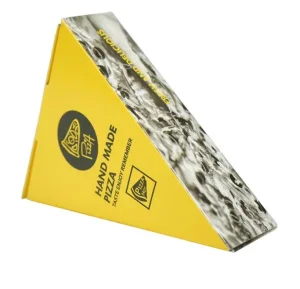
| 7" x 7" x 1.5" (Small/Cone) | E-Flute Kraft Liner (125gsm) | CE, FSC, FDA | 50,000 pcs | $0.06 - $0.11 | Grade A food contact |
| 9" x 9" x 1.5" (Medium) | E-Flute Brown Kraft (135gsm) | CE, FSC, EC 1935/2004 | 30,000 pcs | $0.09 - $0.15 | Grade A food contact |
| 12" x 12" x 1.75" (Standard) | B-Flute Kraft / Testliner (150gsm) | CE, FDA, ISO 9001 | 20,000 pcs | $0.14 - $0.22 | Premium rigid board |
| 15" x 15" x 2" (Large) | B-Flute Heavy Kraft (175gsm) | CE, FSC, EC 1935/2004 | 20,000 pcs | $0.19 - $0.29 | Premium rigid board |
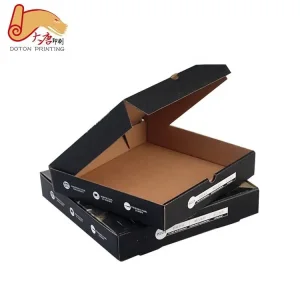
| Custom / Octagonal / Black Pizza Box | Clay-coated Kraft Back (Custom Flute) | CE, FDA, FSC | 20,000 pcs | $0.18 - $0.32 | Premium rigid board |
Note on Market Volatility: FOB price structures fluctuate depending on international pulp markets, freight availability, and structural customization. Surface printing choices (flexographic vs. offset) and regional delivery logistics also affect overall packaging costs. Zhuhai Doton Printing provides integrated logistics management to offset volatility and secure predictable pricing for long-term partners.
Integrating modern technical assets with sustainable manufacturing to supply global enterprises.

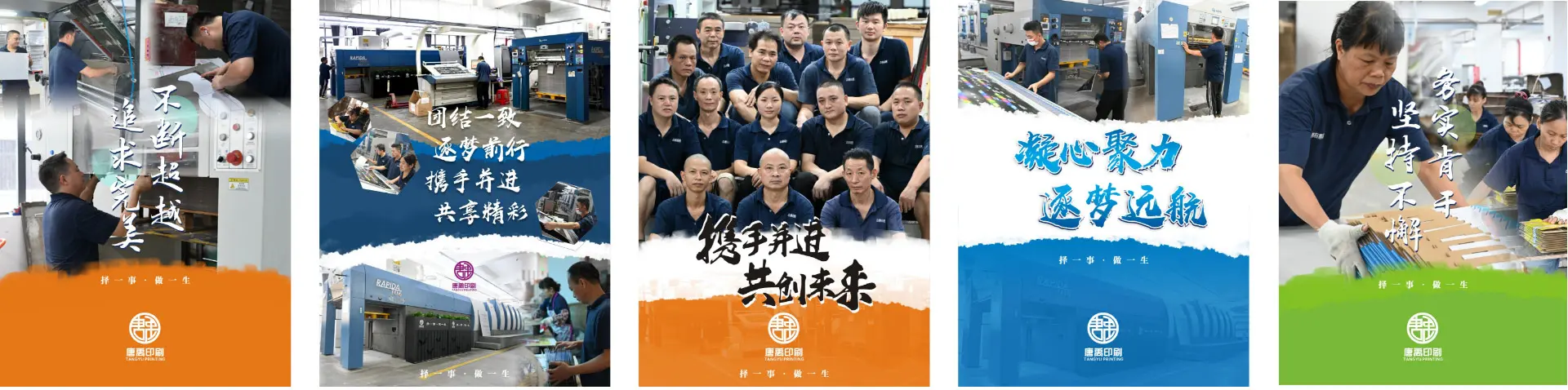
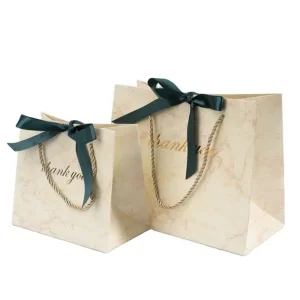
Established in 2009, Zhuhai Doton Printing is a leading, professional manufacturer based in China. We specialize in paper boxes, corrugated boxes, gift boxes, and paper shopping bags. Our high-performance packaging is widely used across the food, wine, cosmetic, jewelry, toy, and garment industries.
Our market success relies on material selection, research, and development. We use FSC-certified paper, recycled materials, soy-based inks, and environmentally safe coatings. To achieve higher-resolution printing, we utilize an advanced direct-to-plate CTP facility system. Printing is the core process of our production; we run brand-new KBA and Heidelberg printing machines to meet strict international quality standards.
With a capacity exceeding 1,000,000 boxes per month, we operate a full range of post-printing facilities. Most of our equipment is fully automated, including film lamination machines, foil stamping machines, die-cutting machines, paper mounting machines, and automated box pasting lines.
The global food industry is shifting toward circular economies and smart logistics. Packaging is no longer just a vessel; it is now a critical touchpoint for food safety, thermal management, and digital customer engagement. Manufacturers must design for diverse logistics systems, ranging from traditional quick-service pizzerias in Western Europe to advanced online food delivery networks in Eastern Asia.
Historically, fluorine compounds were used to make paperboard grease-resistant. However, because PFAS chemicals persist in the environment, regulatory bodies globally have restricted their use. Modern mills rely on biodegradable, water-based barrier coatings. This ensures that pizza boxes can be composted or recycled alongside standard paper waste without depositing toxic residues in water tables.
The physics of heat retention require careful thermodynamic design. If steam is trapped inside a hot box, it breaks down the starches in the crust, making the pizza soggy. Conversely, if too much steam escapes, the cheese hardens, and the crust dries out. Direct-factory production lines use automated die-cutting to create precise vents along the natural convection path. This allows moisture to escape while trapping high temperatures inside the fluted chamber.
Answers to technical, regulatory, and production questions regarding food-contact packaging.
To import food-contact materials into the EU, you must show compliance with Regulation (EC) No 1935/2004. This requires migration testing to prove that packaging materials do not transfer harmful chemicals into hot, fatty foods. A Declaration of Compliance (DoC) acts as proof of compliance at customs, preventing shipping delays.
Kraftliner is made with at least 80% virgin wood pulp fibers, offering high burst strength, moisture resistance, and minimal chemical migration. Testliner uses recycled fibers. While cost-effective, Testliner requires chemical barrier treatments to prevent mineral oils (MOSH/MOAH) from migrating into the food during transport.
Automated production lines run inline monitoring systems that check glue application and creasing pressure. By using automated folding, gluing, and die-cutting machinery, we ensure that every box remains flat for shipping and folds easily at the store level.
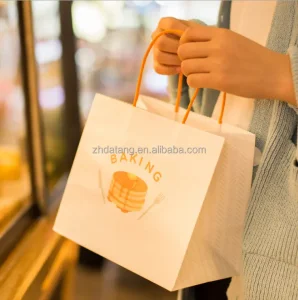
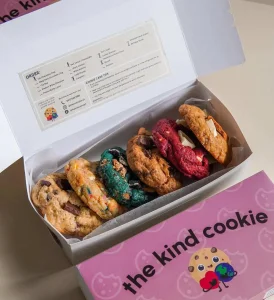
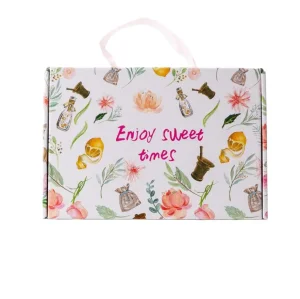
Yes. We run automated post-press machines that handle lamination, hot foil stamping, and custom die-cutting. This makes our lines suitable for luxury confectionery boxes, bakery cases, and high-end gift sets that require premium visual appeal.

 Doton Printing