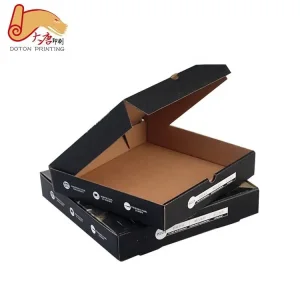
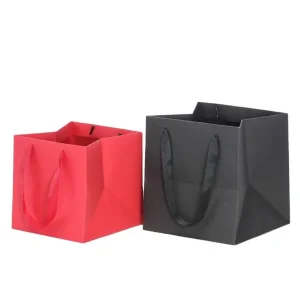
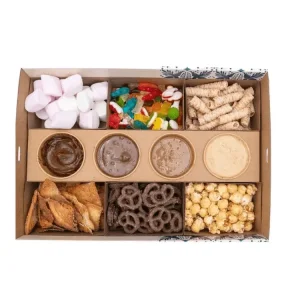
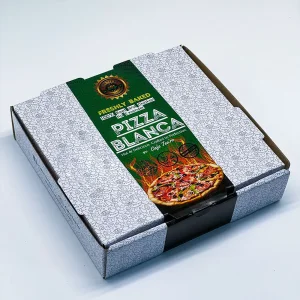
Cheap Brown Cardboard Box Suppliers & Quotes

High-Performance Corrugated Engineering, Scalable Global Sourcing Strategies, and Eco-Conscious Packaging Architecture

1. The Global Landscape of Brown Cardboard Box Sourcing

In the contemporary digital economy, the humble brown cardboard box has evolved from a basic shipping container into a critical node of global logistics, supply chain efficiency, and brand representation. Industrial and commercial enterprises worldwide consume billions of tonnes of unbleached kraft paper products annually. Finding cost-optimized, structurally sound packaging through reliable cheap brown cardboard box suppliers is no longer just a purchasing goal; it is a core business competency.

As the international community transitions toward a circular economy, businesses face the dual pressure of reducing operational expenses while matching strict carbon neutrality and ecological standards. Selecting the appropriate corrugated packaging configuration determines not only the landed cost of goods but also the physical safety of products, customs clearance velocity, and overall consumer perception during the unboxing experience.

βš™οΈ Macro-Economic Sourcing Demands

Global procurement demands are dictated by four primary industrial sectors:

  • Cross-Border E-Commerce & Retail: Speed, weight reduction, and standardized dimensional weights to minimize freight surcharges.
  • FMCG & Food Processing: High-integrity barrier coatings, food-grade certifications, and structural stiffness under moisture-controlled transport lines.
  • Precision Electronics & Automotive Parts: Anti-static coatings, high puncture resistance, and custom-molded interior fluting.
  • Heavy Manufacturing & Chemical Freight: Double and triple-wall industrial corrugated boxes engineered for high-weight compression.
Zhuhai Doton Packaging Production

2. Structural Engineering & Technical Blueprint

Effective cardboard manufacturing demands rigorous engineering. Standard cardboard boxes are not uniform sheet materials; they are complex, layered structures engineered to withstand dynamic shipping loads. Understanding the technical configurations of corrugated materials allows procurement teams to accurately specify requirements during the RFQ (Request for Quote) process.

πŸ“ Flute Configurations

The wavy inner layer (fluting) determines a box's structural characteristics:

  • A-Flute (~4.8mm): Superior cushioning properties; ideal for fragile items requiring displacement protection.
  • B-Flute (~3.2mm): Enhanced puncture resistance and structural rigidity; commonly deployed for retail shippers.
  • C-Flute (~4.0mm): The industry standard for shipping boxes, balanced load support and stacking strength.
  • E-Flute (~1.6mm): Ultra-fine profile offering superb printability; perfect for cosmetic, electronics, and food cartons.

πŸ”¬ Strength Diagnostics

We test packaging integrity using two standardized methodologies to ensure performance under load:

  • ECT (Edge Crush Test): Measures the top-to-bottom compression capacity of the board. Expressed in pounds per inch (e.g., 32 ECT vs. 44 ECT). ECT correlates directly to box stacking capacity in warehouses.
  • Bursting Test (Mullen): Measures the pressure required to rupture the cardboard face (expressed in PSI, e.g., 200# Mullen Test). Ideal for protecting heavy, loose contents.

♻️ Material Science

Modern brown cardboard utilizes a calculated ratio of virgin and recycled fibers. Virgin kraft linerboard provides maximum tensile strength and tear resistance, whereas recycled testliner optimizes material cost. Precision calibration yields cost savings without sacrificing safety margins.

Industrial Corrugated Engineering Roadmap

Step 1: Fiber Optimization (Raw Material Prep)

Refining unbleached softwood fibers with recycled containerboard pulps to achieve target tensile parameters while maintaining ecological integrity (FSC Certified inputs).

Step 2: Precision Fluting & Starch Bonding

Passing corrugating medium through heated grooved rollers and adhering linerboards using eco-safe cornstarch adhesives under tight temperature limits.

Step 3: High-Resolution Printing & Finishing

Applying high-accuracy custom logo prints utilizing eco-friendly soy inks on automated Heidelberg or KBA offset presses for sharp branding and design.

Step 4: Structural Die-Cutting & Gluing

Employing high-speed automated CAD-guided die-cutters to fold, slot, glue, or stitch flat cardboard templates into ready-to-deploy boxes.

3. Zhuhai Doton Printing: Core Competencies & Infrastructure

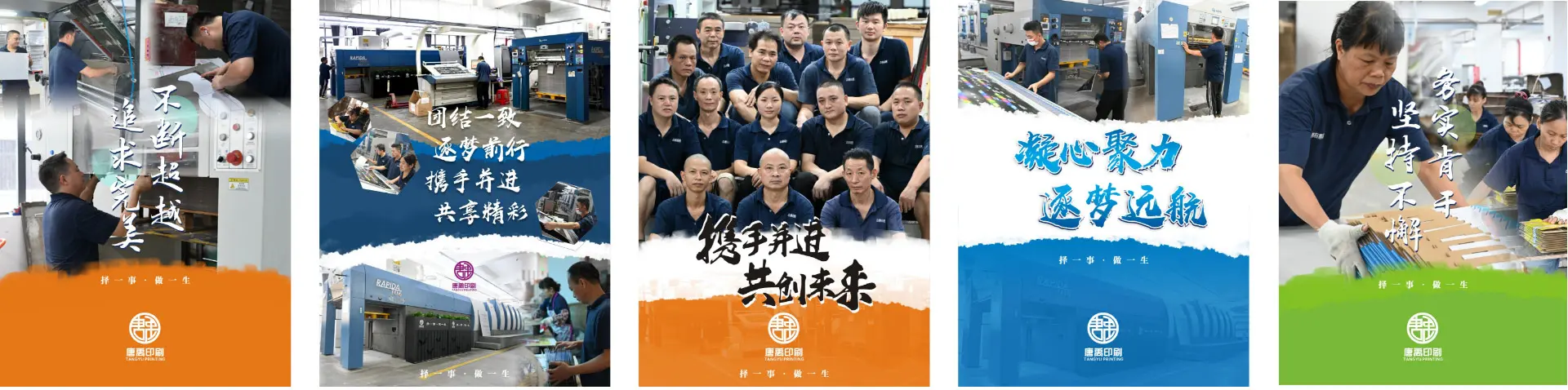
Established in 2009, Zhuhai Doton Printing has grown into a leading professional manufacturer in China, specializing in high-grade custom paper packaging solutions.
15+
Years Experience
1.2M+
Monthly Box Capacity
100%
FSC & Recycled Raw Materials
Zero
Production Waste Starch
Zhuhai Doton Plant Machinery

Why Choose Doton Packaging?

Our operation balances production capacity, cost-efficiency, and strict quality control:

  • Advanced Printing Hardware: We deploy modern brand new KBA and Heidelberg printing systems alongside advanced CTP (Computer-to-Plate) technology to secure high-resolution outputs.
  • Automated After-Print Facilities: Seamless integration of automated lamination, foil stamping, high-speed die-cutting, paper mounting, and box pasting machinery ensures dimensional uniformity.
  • One-Stop Solution Services: From initial structural concepts and CAD layout prototyping to optimized freight loading patterns, Doton streamlines the entire package lifecyle.
  • FSC and Soy Ink Standard: Every production batch is aligned with ecological directives, reducing your carbon footprint while guaranteeing food-grade chemical safety.

4. Global Compliance & Supply Chain Optimization

For international corporations, navigating regulatory compliance is as critical as pricing. Packaging materials must adhere to the regional laws of the importing country. Doton guarantees comprehensive compliance and structural certification across diverse territories.

πŸ‡ͺπŸ‡Ί European Union Standards

Compliance with the European Packaging and Packaging Waste Directive (Directive 94/62/EC), heavy metal ceiling limits (under 100 ppm total concentration of lead, cadmium, mercury, and hexavalent chromium), and certified CE markings for primary food contact boxes.

πŸ‡ΊπŸ‡Έ North American Standards

Strict alignment with CONEG toxin restrictions, FDA food contact packaging guidelines under 21 CFR regulations for biodegradable takeout paper structures, and National Motor Freight Traffic Association (NMFTA) box builder standards.

🌏 Regional Logistics Support

Strategic shipping coordination with global freight hubs. Optimized container space planning and knock-down flat packaging design allow clients to reduce ocean transport costs and avoid volumetric weight surcharges.

5. The Strategic RFQ: Decoding Quotes & Cost-Efficiency

Sourcing cheap cardboard packaging requires an understanding of how manufacturers structure their quotes. A low headline unit price can be offset by high plate fees, freight costs, or assembly overhead. By optimizing structural design, business buyers can secure competitive prices without sacrificing packaging performance.

Cost Driver Procurement Impact Optimization Strategy
Material Grammage Liner and medium paper weight (GSM) directly correlates to raw material costs (up to 65% of base unit price). Match strength requirements to shipping stress using ECT testing rather than over-specifying paper thickness.
Tooling & Plates Custom steel die-cuts and polymer flexographic/offset plates involve significant one-time setup costs. Consolidate shipping sizes. Run multiple SKU layouts using standardized box outer dimensions.
Volume Scaling Low volume runs trigger high setup-to-run cost ratios on large industrial offset presses. Order yearly packaging demands in single runs, utilizing warehousing agreements for staggered releases.
Freight Design Shipped boxes generate volume; un-optimized shipping styles lead to excessive shipping container headroom loss. Procure flat-shipped designs (RSC or Auto-Lock bottoms) that pack tight, lowering container cost per unit.

6. Expert Sourcing & Technical FAQ

In-depth answers to critical procurement questions to assist supply chain managers in choosing the right material composition and supplier dynamics.

Q How does Doton manage price fluctuations in raw paper pulp?
We mitigate raw material volatility through long-term volume agreements with top forestries and mills. This stabilizes our pricing structures for contract clients. Additionally, our dual-sourcing model balances virgin Kraft fibers with post-consumer recycled testliner to optimize pricing options without sacrificing quality.
Q Can we secure customized sample mockups prior to placing large production orders?
Yes. We offer both digital 3D CAD modeling and physical prototyping services. Digital CAD layouts are processed rapidly. Physical sample generation uses advanced plotting tables, allowing clients to test fit and run test drop sequences before starting full print production.
Q What is the difference between standard Kraft boxes and recycled testliner cardboard?
Kraft paper is produced using unbleached virgin wood pulp through the sulfate chemical process, preserving long, intact wood fibers for superior tensile and burst strength. Testliner is composed of recycled fibers, offering a cost-effective, eco-friendly option with slightly lower burst limits. We often combine Kraft outer liners with recycled testliner inner channels to achieve balance between cost and strength.
Q Which food-grade compliance standards are applied to Doton's bakery and takeout boxes?
Our food boxes are manufactured with FDA-approved, direct-contact paperboards and water-resistant vegetable-based adhesives. We avoid fluorocarbons (PFAS-free) and print exclusively with heavy-metal-free, soy-based inks. This ensures compliance with EU Regulation 1935/2004 and FDA 21 CFR requirements for direct food handling.
Q How do flute sizes impact the pallet stackability and structural calculations of shipping boxes?
Pallet load calculations rely on a box's Bending Stiffness and Compression Strength. Standard C-flute and double-wall BC configurations provide excellent vertical structural alignment, resisting top-down forces during stacking. For heavy pallet loads, we recommend a 44 ECT double-wall structure. For lighter retail goods, space-efficient E-flute or B-flute packaging maximizes cube utilization.