 Doton Printing
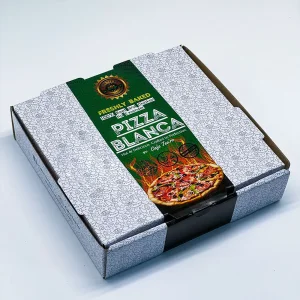

Global Pizza Packaging Evolution: Navigating Cheap Procurement without Compromising Quality
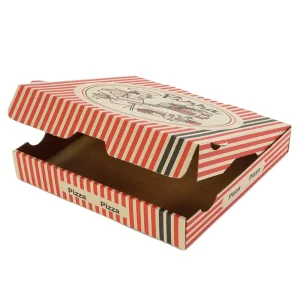
In the highly competitive quick-service restaurant (QSR) sector, the humble corrugated pizza carton is no longer treated merely as a structural shell. Instead, it serves as a critical variable in thermodynamic control, brand differentiation, food safety, and overall margin management. Global multi-unit fast-food brands and distributors continuously seek cost-effective, bulk sourcing arrangements with direct factories in China. Achieving optimization in cost and performance requires an engineering-first perspective that looks past nominal unit price and analyzes total lifetime cost. By standardizing raw material parameters, enhancing structural load-bearing design, and leveraging high-volume automated manufacturing, brands can maximize economic return while lowering their carbon footprint.
Global Procurement Demands: Beyond the Surface-Level Cost Squeeze
Procuring low-cost packaging is not just a matter of negotiating lower prices per metric ton of kraft pulp. For international brands and retail supply chain managers, cost reduction must be balanced with operational reliability and structural integrity. Key procurement challenges include shipping efficiency (maximizing container utilization via flat-packed shipping configurations) and material yield (utilizing minimal fiber content while maintaining structural rigidity). Additionally, the packaging must perform reliably under high humidity and heat, keeping food hot without collapsing during multi-tier delivery stackings. High-volume buyers require direct-to-factory partnerships to reduce middle-man fees, secure long-term raw material hedges, and design custom box configurations that minimize waste during high-speed production.
Macro-Level Packaging and Logistics System Solutions
Addressing supply chain challenges in QSR packaging requires a holistic approach that integrates logistics, automated operations, and mechanical design. At the micro-level, selecting the right flute configuration—such as E-flute for thin, lightweight, high-print-quality boxes or B-flute for heavy-crust, multi-topping pizzas—directly impacts shipping volume and crush resistance. Advanced structural designs like web-corner foldings, venting holes placed away from thermal zones, and integrated peel-and-seal adhesive tear strips streamline final assembly and keep food fresh. Implementing automated box-erecting systems in centralized warehouses reduces high labor costs, making direct-from-factory sourcing highly competitive on a global scale.