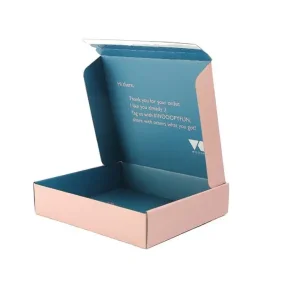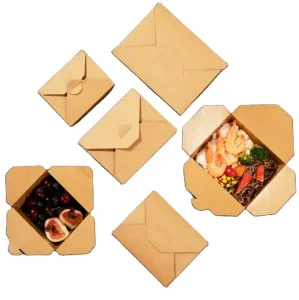
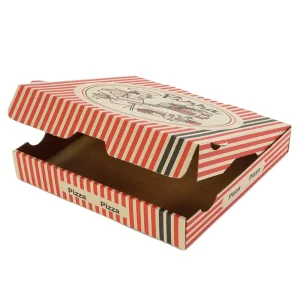
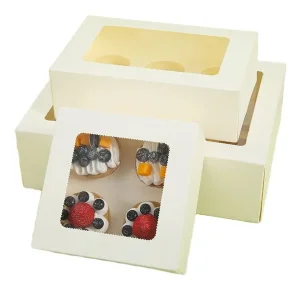
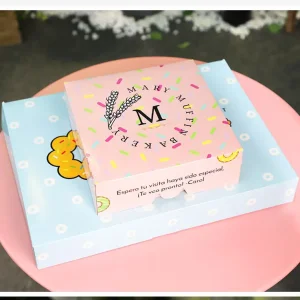
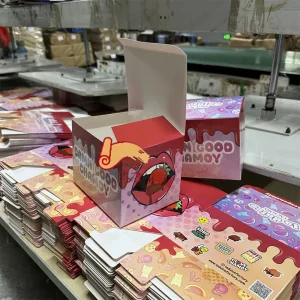
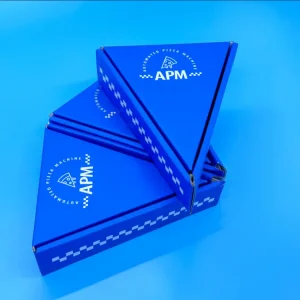
In the rapidly evolving Quick Service Restaurant (QSR) sector, Triangle Pizza Boxes (commonly referred to as single-slice pizza packaging) have transformed from a novelty item into an essential logistics and marketing asset. Driven by structural urban shifts, a surge in grab-and-go convenience retail, and rising demands for single-serving portions, the global market for specialized triangular takeaway containers has registered double-digit year-on-year growth. Major metropolitan hubs throughout North America, Western Europe, and Asia-Pacific have observed a distinct consumer preference toward portion-controlled, highly portable meal options.
This shift has significant supply-chain ramifications. Traditional square pizza boxes, while efficient for family-style deliveries, suffer from volume inefficiencies, poor thermal retention, and structural degradation when used to transport single, isolated slices. As a response, specialized China Triangle Pizza Box Manufacturers & Factories have developed advanced structural designs using micro-flute corrugated cardboard, oil-resistant coatings, and high-precision folding mechanics to cater to this specific market segment.
Engineering a superior triangle pizza box requires balancing heat preservation, structural rigidity, moisture release, and chemical safety. Conventional paperboard fails when exposed to hot, lipid-heavy oils and steam radiating from freshly baked pizza slices. Without proper structural engineering, moisture traps cause the box to warp, rendering the cardboard soggy and compromising the consumer experience.
To prevent this structural compromise, top-tier factories utilize E-flute and F-flute corrugated cardboard. These thin, high-density fluted materials provide exceptional compression strength while maintaining minimal profile dimensions—vital features for logistics optimization. Furthermore, inner liners are reinforced with biodegradable, clay-coated barriers, aqueous coatings, or plant-derived PLA linings instead of standard fluorochemical (PFAS) grease-proofing agents. This substitution guarantees complete compostability and aligns with global eco-friendly regulations.
Our advanced packaging lines focus on physical test compliance, certifying long-term stability and product containment under demanding conditions:
Established in 2009, Zhuhai Doton Printing stands as one of the leading and highly professional packaging manufacturers in China. Specializing in paper boxes, corrugated cartons, luxury gift cases, and customized carrier bags, the enterprise delivers premium packaging structures that cater specifically to the global food, wine, cosmetics, jewelry, toy, and garment industries.

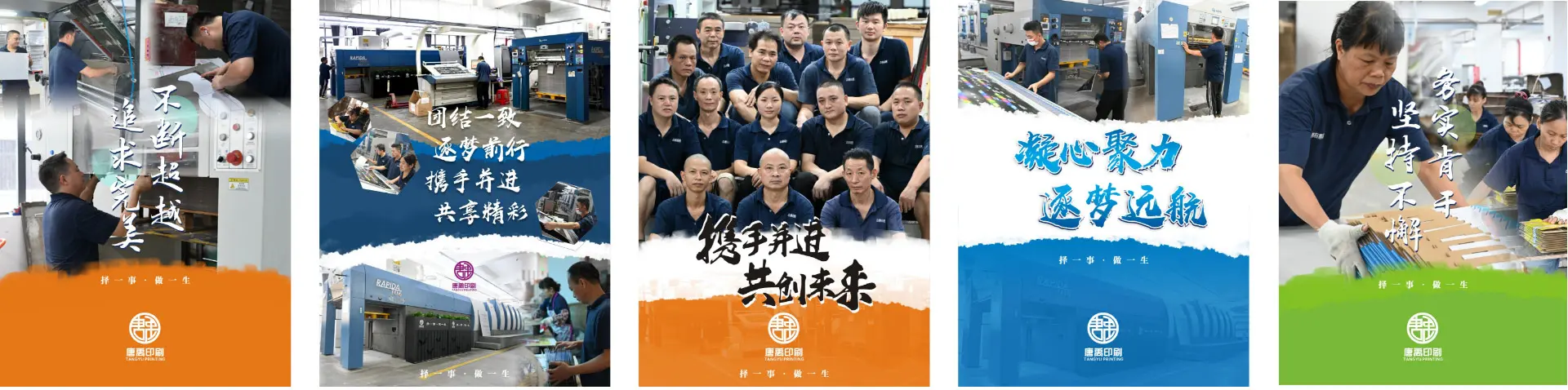
A primary driver behind Doton’s market leadership and long-term success is a dedicated investment in material research, structural development, and cutting-edge automation. By utilizing FSC-certified paperboard, PCR (post-consumer recycled) materials, and biodegradable soy-based inks, Doton provides brands with eco-friendly products that do not compromise on structural performance or aesthetic resolution. The facility implements direct-to-plate Computer-To-Plate (CTP) prepress systems, ensuring high-fidelity color rendering and vector precision during production.
With an active production throughput of over one million boxes per month, Doton operates a comprehensive post-print setup with fully automated machinery including film laminators, hot foil stamping presses, die-cutters, paper mounting lines, and high-speed box pasting equipment.
Selecting the appropriate cardboard substrate directly affects cost, branding, and transit durability. The matrix below contrasts the three primary packaging materials manufactured at our factories to guide your procurement selection:
| Material Class | Common Flute Profile | Structural Rigidity | Grease & Moisture Barrier | Ideal Application Scenario |
|---|---|---|---|---|
| Virgin Kraft Paperboard | N/A (Rigid Folding) | Medium-High | Aqueous Coating Option Required | Premium bakeries, gourmet single slices, eco-branding |
| E-Flute Corrugated Cardboard | 1.1mm - 1.6mm thickness | Excellent | Coated inner liner | High-heat takeaways, commercial delivery services, stacked display |
| F-Flute Micro-Corrugated | 0.75mm - 0.9mm thickness | High (Ultra-Compact) | Clay or bio-polymer lining | Space-constrained transport, luxury takeaway, fast-assembly retail |
| Recycled Grey Board | N/A (Solid card) | Medium | Requires laminated lining | Budget-driven local distribution, cold dessert slices, dry goods |
Achieving reliable packaging requires strict adherence to standardized manufacturing procedures. Below is our automated technical roadmap that guarantees dimensional consistency, crisp ink replication, and structural integrity across every production run:
Drafting exact physical dimensions, structural fold creases, and locking tab locations to verify alignment and minimize setup waste.
Outputting digital graphics directly onto metal plates. This process maximizes color registration and vector sharpness for KBA and Heidelberg machinery.
Using high-speed, computer-controlled rotary cutters to ensure precise edges and error-free manual assembly on site.
Automatically creasing, folding, and sorting boxes into flat-packed bundles. This layout minimizes storage volume and reduces ocean freight expenses.
Triangle pizza slice boxes serve diverse commercial use cases globally, each demanding specific material capabilities and structural considerations:
High-turnover venues require quick-assembly boxes with tuck-top lids. E-flute corrugated cardboard remains the industry standard, allowing vendors to pre-fold containers during slow periods and stack them securely under food warmers.
Modern convenience store chains require single-slice packaging with integrated clear PET or PLA plastic windows. This visual display showcases food freshness, encouraging impulse purchases while maintaining high sanitation standards.
Mass venues require rigid, moisture-resistant packaging that handles high condensation in outdoor settings. Double-walled triangular trays or clamshell structures prevent leakage, keeping consumers clean while they walk.
To assist procurement managers, we optimize box designs to suit regional customs and shipping requirements. For the North American market, boxes are sized for larger 18-to-20-inch pizza slices. For European and Asian markets, dimensions are scaled down to match thinner hand-tossed or Neapolitan-style crust sizes, reducing excess empty space and ensuring tight, secure packaging.
Navigating international custom packaging regulations and procurement logistics requires transparent, expert answers. Here are the primary considerations global buyers face when sourcing triangle pizza boxes from Chinese manufacturers:


 Doton Printing