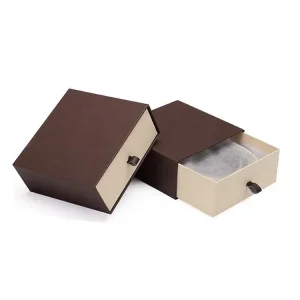
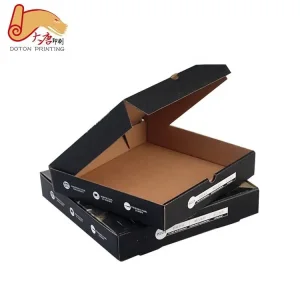
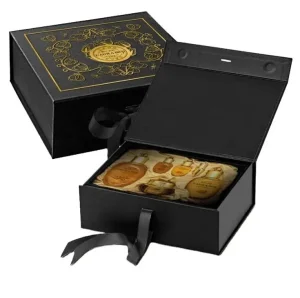
Discover our range of customizable, high-durability packaging designs engineered to minimize waste and optimize logistic efficiencies across international distribution loops.
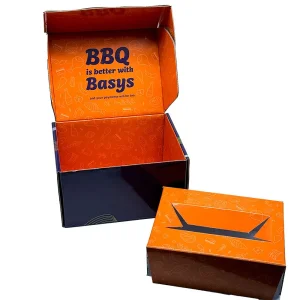
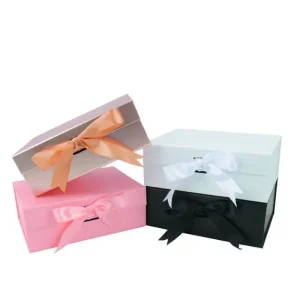
The global Quick Service Restaurant (QSR) industry is facing unprecedented pressure from regulatory bodies, consumers, and environmental groups to address the immense waste generated by single-use packaging. Traditional corrugated pizza boxes, while biodegradable in ideal conditions, often end up in landfills due to grease and food contamination, which rendering them unrecyclable. This realization has catalyzed a massive paradigm shift toward closed-loop circular supply models led by advanced reusable pizza boxes.
From the European Union's Packaging and Packaging Waste Regulation (PPWR) directives to strict state-level single-use plastic bans across North America, commercial operators must transition from a "take-make-waste" linearity to durable, multi-use container systems. Research indicates that implementing reusable pizza containers can lower a brand's packaging-related carbon emissions by up to 72% over a typical 3-year lifecycle, provided the container achieves a reuse rate of 50 or more cycles. Consequently, global purchasing managers are moving beyond transactional spot-buys toward strategic long-term supply partnerships with certified Chinese manufacturers capable of scaling production while maintaining food-grade structural integrity.
Developing a high-performance reusable pizza box requires balancing thermo-physical properties, chemical safety, and mechanical endurance. Traditional single-use boxes lose structural rigidity as steam condenses. In contrast, modern reusable alternatives rely on precision engineering to solve thermodynamics and food quality challenges:
Most commercial-grade reusable pizza boxes are constructed from specialized, high-density, food-contact safe Polypropylene (PP) compounds or copolyesters. These polymers are chosen for their high melting points, impact resilience, and resistance to chemical degradation during commercial cleaning cycles. To enhance structural strength without increasing weight, manufacturers often employ structural foam injection molding or mineral-reinforced PP. This ensures the box can withstand repeated vertical loads when stacked in delivery vehicles without bowing or cracking.
One major challenge of non-porous polymer containers is moisture management. Hot pizza releases steam; if trapped, the condensation makes the crust soggy. Top-tier engineering firms design patented vent-and-groove systems:

As circular loops depend on asset recovery, future product roadmaps focus heavily on tracking technology. Smart reusable pizza boxes feature embedded passive Radio Frequency Identification (RFID) or Near Field Communication (NFC) tags. These trackers survive heat, water, and detergents, allowing QSR chains to monitor wash cycles, estimate lifespans, track inventory, and calculate cost savings automatically.
Zhuhai Doton Printing (established in 2009) offers over 15 years of industry-leading experience in package design and full-scale manufacturing, delivering globally compliant solutions.
Deep expertise in rapid structural CAD packaging design, tailoring dimensions and materials for regional delivery fleets and corporate clients.
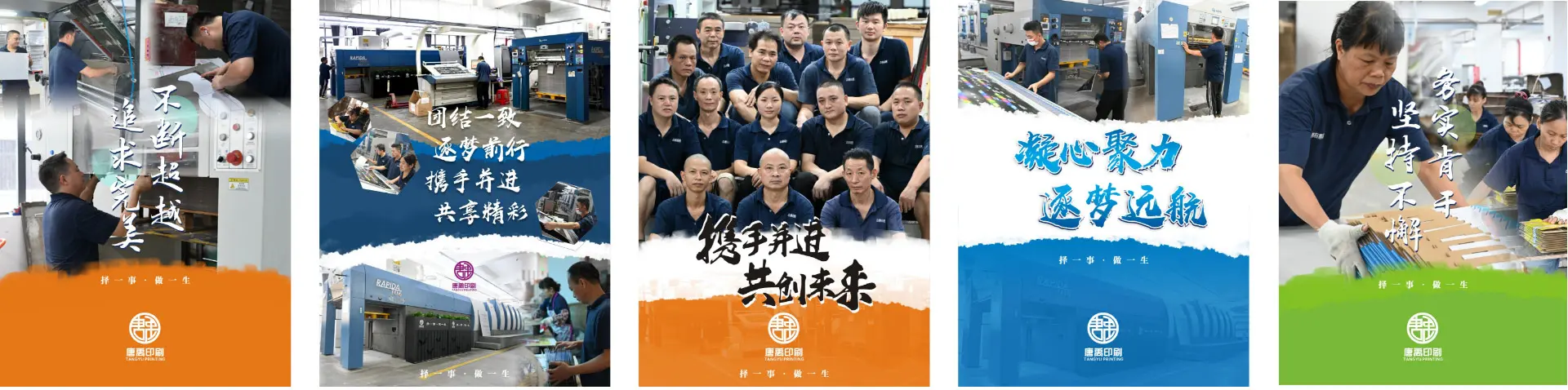
Equipped with new KBA and Heidelberg offset machinery to deliver high-resolution branding, utilizing eco-safe soy-based inks and CTP workflows.
Robust partnerships for FSC-certified wood fibers, bioplastics, and heavy-duty recyclables, securing supply chain resilience against raw material volatility.
We optimize packing volumes and shipping costs, offering flat-packed options and modular systems for seamless global delivery.
Producing over 1 million units monthly. Post-printing processing features automated die-cutting, laminating, foil stamping, and folding machinery.
Sourcing discount reusable packaging requires high volume to offset initial tooling costs. Chinese manufacturing hubs utilize Industry 4.0 methodologies to deliver high-quality, cost-efficient solutions. Automation, deep supply integration, and cluster logistics enable our factories to maintain competitive pricing without sacrificing food-safety standards.
By standardizing molds and running fully automated, high-pressure injection molding systems, China-based manufacturers achieve high throughput and consistent tolerances. Automated sensor arrays monitor molten temperature and cooling rates, ensuring each box matches the CAD specification. This process minimizes scrap rates and allows us to pass cost savings directly to buyers in Europe, the Americas, and APAC.
Our facility houses advanced post-processing machines (film lamination, automatic die-cutters, high-speed box gluers) alongside KBA printing presses. This vertical integration streamlines production: raw polymer pellets or raw paper sheets enter the facility, and finished, packaged boxes exit, ready for export.
Global procurement teams must look past the initial acquisition price and analyze the Total Cost of Ownership (TCO). While a reusable box carries a higher upfront unit cost than a single-use corrugated box, it pays off over its service lifespan. The table below illustrates the cost trajectory over 1, 3, and 5 years (assuming standard daily deliveries of 500 pizzas per retail location):
| Cost Metric (Per Location) | Single-Use Corrugated Cardboard | Durable Polypropylene Reusable Box | Projected Enterprise Savings |
|---|---|---|---|
| Initial Unit Price | $0.32 - $0.45 per box | $4.50 - $6.00 per box | N/A (Higher initial investment for reusable) |
| Expected Service Lifespan | 1 Delivery Cycle | 500 - 1,000 Delivery Cycles | Up to 1000x life expansion per unit |
| Year 1 Total Cost | $73,000 (Based on daily use/discard) | $12,500 (Initial buy + sanitization costs) | $60,500 (82.8% Cost Reduction) |
| Year 3 Total Cost | $219,000 (Ongoing procurement) | $21,000 (Replacement allowance & wash loops) | $198,000 (90.4% Cost Reduction) |
| Year 5 Total Cost | $365,000 (Subject to inflation) | $29,500 (Replacement allowance & wash loops) | $335,500 (91.9% Cost Reduction) |
Entering international consumer markets demands strict compliance with regional food-contact material (FCM) regulations. Our manufacturing processes undergo regular third-party audits to guarantee safety and compliance. We maintain the certifications required to facilitate hassle-free customs clearance and ensure local brand safety:
Our plastics, pigments, and additives comply with US FDA Title 21 CFR sections. This guarantees that no harmful chemicals leach into food, even at high delivery temperatures.
All materials are certified under EU Regulation (EC) No 1935/2004 and Regulation (EU) No 10/2011, making them fully compliant with European migration limit standards.
Our facilities employ ISO-certified manufacturing practices to ensure uniform wall thickness, drop-test resilience, and optimized material usage.
To help brands transition smoothly to reusable packaging, we offer end-to-end design and customization support:
Everything procurement officers, franchise operators, and sustainability directors need to know about purchasing, logistics, and material safety.
Browse our selection of specialized paperboard, corrugated cardboard, and luxury food-grade packaging designed for global logistics.
 Doton Printing