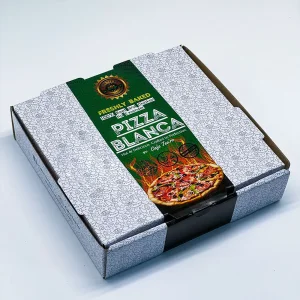
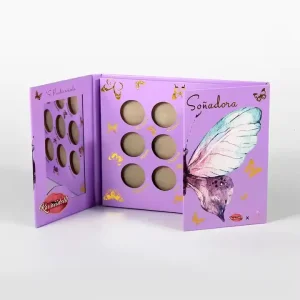
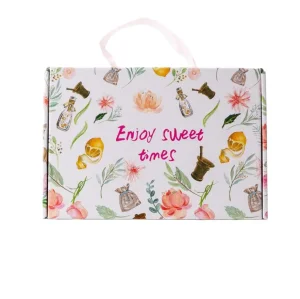
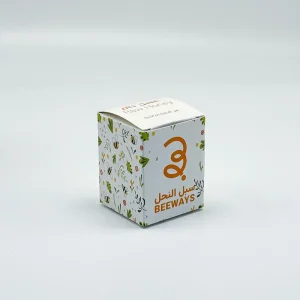
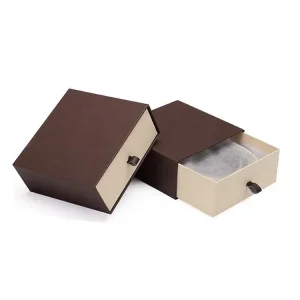
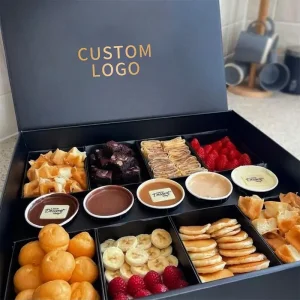
Explore our highly-demanded ODM and OEM food-grade boxes, sustainable paper carriers, and premium retail packaging options manufactured directly at our advanced facility.
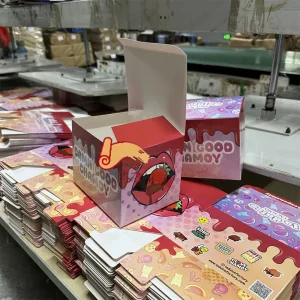
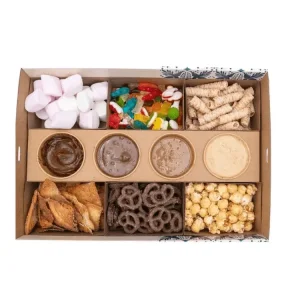
The global fast-food, takeaway, and convenience dining markets have undergone an unprecedented transformation. No longer is the standard 12-inch or 16-inch corrugated box sufficient for modern consumer behaviors. The rise of single-slice consumption, micro-meals, and portion-controlled distribution has created a massive, specialized niche for the Pizza Slice Storage Container. As large-scale food distributors, quick-service restaurant (QSR) chains, and wholesale packaging procurement offices shift focus toward sustainability and premium product presentation, ODM (Original Design Manufacturer) factories have emerged as the foundational backbone of this evolution.
From structural design to material science, an optimal pizza slice container must balance insulation, moisture control, structural rigidity, and circular-economy alignment. This document explores the technical breakthroughs, manufacturing standards, and commercial landscapes of ODM pizza slice container production, illustrating how industrial expertise guarantees both operational success and regulatory compliance.
B2B procurement of pizza slice containers is driven by strict operational metrics. The primary pain point for international purchasers—such as procurement directors of global hotel chains, airport QSR kiosks, and delivery aggregators—is ensuring food quality during transit. A pizza slice is uniquely challenging: it contains high fat content, volatile steam, and crisp starch layers that quickly degrade if trapped in a non-breathing environment.
To address these challenges, advanced ODM manufacturers construct triangular containers designed with targeted micro-ventilation systems and precise grease-resistant barrier boards. Global procurement managers demand:
Designed with customized structural vents that exhaust humidity while retaining thermal mass to prevent soggy crusts.
FDA-compliant, fluorocarbon-free, water-based coatings that resist lipid migration and structural box failure.
High-speed creasing lines ensure effortless setup on the packing line, cutting down assembly labor costs by 35%.
From a macro perspective, the commercial food service packaging industry is shifting rapidly away from single-use plastics. Municipalities and nations worldwide are enacting bans on expanded polystyrene (EPS) containers. Consequently, paper-based alternatives have taken center stage. The raw materials used in manufacturing high-performance slice containers dictate their ecological footprint and structural lifecycle:

Doton Packaging Factory: Fully Automated High-Speed Production Lines
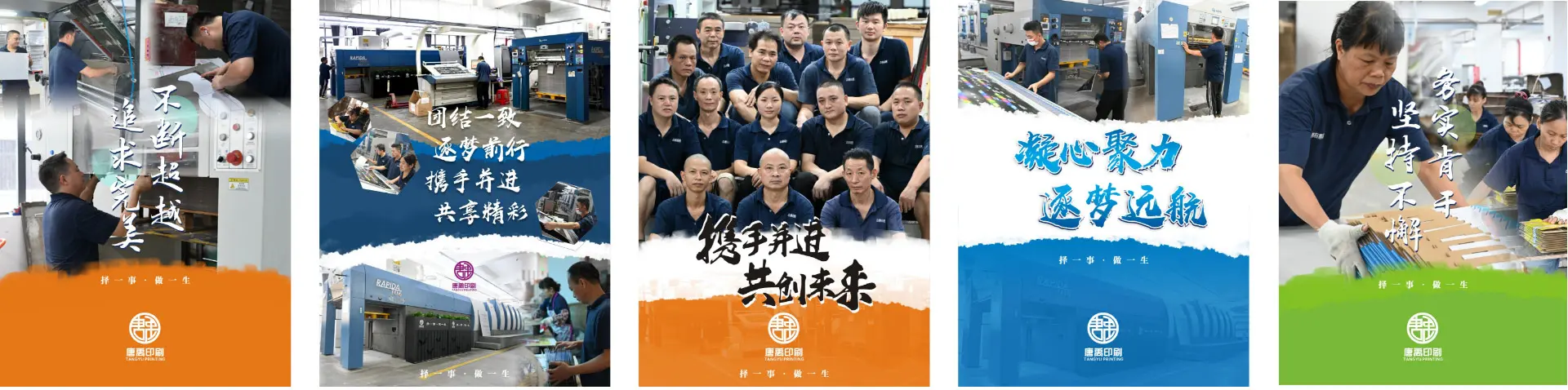
Advanced Die-Cutting and Eco-Friendly Material Preparation
Traditional greaseproofing utilized per- and polyfluoroalkyl substances (PFAS), chemicals that have faced widespread international bans due to bioaccumulation. The modern ODM roadmap focuses on developing non-toxic barrier technologies. The application of water-based dispersion barriers, bio-wax coatings, and PLA (polylactic acid) linings has successfully mitigated the oil-penetration issue while maintaining 100% repulpability and biodegradability.
Parallel to barrier technologies, the development of high-resolution, low-migration inks is crucial. Soy-based inks and UV-cured food-safe inks applied via cutting-edge offset printing presses (such as Doton's KBA systems) prevent chemical migration from the exterior print layer through to the interior food contact surface.
Why global brands partner with Doton Printing for high-volume custom packaging programs.
Established in 2009, Zhuhai Doton Printing has built an industry-leading reputation as a professional manufacturer in China specializing in paper boxes, corrugated packaging, custom gift boxes, and shopping bags. Across multiple industries—including food, wine, cosmetics, jewelry, and garment packaging—Doton's core philosophy centers on continuous material R&D and precision engineering.
Our facility runs advanced CTP (Computer-to-Plate) systems, transitioning directly from raw vector artwork to physical printing plates. This guarantees zero loss in resolution and maintains exact brand color matching. Central to our factory is the brand new, top-tier KBA offset printing machine, designed to process complex high-speed print jobs while adhering to tight tolerance parameters.
To sustain an industrial output exceeding 1,000,000 boxes per month, our post-press department is fully automated. Doton utilizes state-of-the-art automatic film laminators, precision hot foil stamping machines, automatic die-cutters, paper mounting machines, and high-speed box pasting equipment. This minimizes human error, optimizes speed-to-market, and stabilizes wholesale pricing structures for our global clients.
When shipping food-contact containers internationally, factories must strictly follow regional compliance protocols. In the United States, materials must meet FDA Title 21 CFR standards for direct food contact. In the European Union, packaging components must conform to Regulation (EC) No 1935/2004, certifying that chemical transfer into food does not threaten human health or alter food quality.
At Doton, our quality management systems trace raw paper pulps back to their forests of origin. We prioritize FSC (Forest Stewardship Council) certified suppliers, ensuring sustainable logging and environmental management. Our processes verify that no heavy metals, fluorinated hydrocarbons, or toxic volatile organic compounds (VOCs) enter the manufacturing stream. Through this rigorous quality control loop, we protect our international clients from supply chain disruptions, customs import rejections, or product liability claims.
For custom-printed OEM/ODM pizza slice boxes, our typical MOQ starts at 10,000 units. This lets us configure our high-speed KBA offset printing machines and automatic die-cutters efficiently, offering the lowest unit cost for our B2B partners.
We use next-generation, food-safe water-based dispersion barriers. These biodegradable coatings are entirely PFAS-free and compostable, yet they deliver outstanding oil and grease resistance (Kit Test ratings up to 8-10) to prevent package softening during transport.
Yes. All our corrugated and cardboard pizza slice containers are designed to ship flat-packed. This dramatically increases shipping container density, lowering sea and land freight costs for international buyers.
Our packaging matches FDA and EU standards for food contact materials. We hold FSC certification for our wood-fiber supply chains, and our processes are certified under standard manufacturing quality metrics to ensure safety and traceability.
From custom retail carriers to luxury gift boxes and CBD packaging, our production lines are equipped to deliver tailored solutions for every industry vertical.

 Doton Printing